Sump-pump installation in Omaha: compare the proposed system
Published November 2, 2026 · Sources checked November 2, 2026
Written by Arthur Smelyansky, Publisher. Updated November 2, 2026.
Evaluate a sump-pump proposal as a complete water-management system: what collects the water, how it reaches the basin, which equipment moves it and where it discharges. A model name or horsepower rating alone does not describe the work. Start with the Omaha water assessment guide if the source of the water has not been established.
What should the written scope identify?
Ask for the proposed basin, pump model, cover, discharge route and any connected collection drains, together with the work needed to install them. Have the provider distinguish a like-for-like equipment replacement from a change to the system. Record what is included in removal, access, restoration and operating checks, and list the decisions that still require investigation.
| Scope item | Question to put beside the price |
|---|---|
| Existing system | What is being reused, removed or replaced? |
| Collection route | What water will reach the basin, and how? |
| Pump and controls | Which model and controls are included, and why? |
| Cover and penetrations | How will the lid and openings be sealed and accessed? |
| Discharge | Where will the water go, and who confirms the route is permitted? |
| Completion | What operating checks and owner instructions are included? |
Why does the cover belong in the discussion?
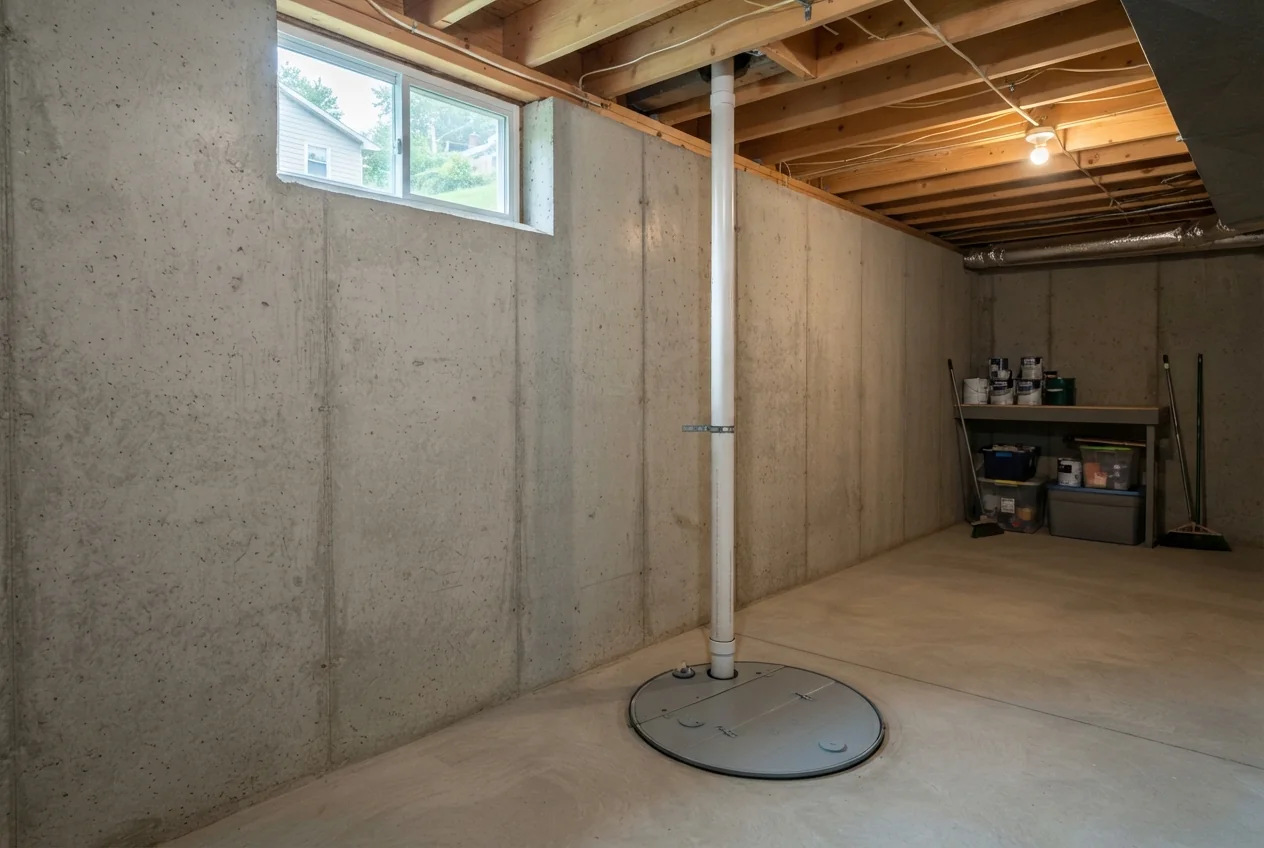
The cover is part of the system, not simply a cosmetic finish. The Department of Energy's Building America Solution Center describes a tight-fitting, gasketed and mechanically fastened sump lid, with sealed penetrations and access for maintenance. Ask how the proposal addresses those details and how the owner can service the equipment without treating this national guidance as a verified Omaha code determination.
The PNNL sump-cover guide also explains that an open or poorly sealed sump can add moisture and allow soil gases into a basement. That guidance does not establish the conditions at your home or provide a radon result for it.
What should you ask about the discharge route?
Request a clear description of where the proposed discharge runs and where it ends. Ask who checks applicable requirements, which authority is responsible and how seasonal operation or maintenance concerns will be addressed. A national diagram does not authorize a particular connection in Omaha. Keep the provider's answer in the written scope before approving work.
Use the check-valve definition to understand that component. A sump check valve and a sewer backwater device should not be treated as interchangeable labels. If the concern is wastewater returning through a fixture, read sewer backup and ask for the appropriate separate investigation.
How do you compare backup and maintenance options?
Ask the provider to explain which failure or interruption each option is intended to address, what it depends on and what owner maintenance it requires. Request the included model information and manufacturer instructions. Keep assumptions about runtime or protection out of the comparison unless the provider documents their basis for the proposed system and site conditions.
Bring these questions to the appointment:
- What remains unresolved if the primary pump or power source is unavailable?
- Which alarm or backup components are included, and which are optional?
- Who demonstrates normal operation and explains any owner checks?
- Which maintenance actions are required by the supplied instructions?
- What does the warranty cover, exclude and require from the owner?
Does Omaha's rainfall normal size the pump?
No. The station's annual precipitation normal describes historical weather, not the inflow or discharge conditions at a specific basin. Our Omaha local statistics provide the data period and station boundary. Ask the provider what site observations and equipment specifications support the selection; do not substitute a city climate figure for that explanation.
What should you receive at handover?
Request the final component list, operating-check record, relevant approval or inspection documents, manufacturer instructions, warranty terms and a contact for follow-up. Record any changes from the original scope and remaining work. Keep the project checklist with those documents so future maintenance or assessment starts with a useful record.